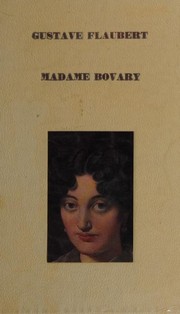
Madame Bovary
Flaubert's novel of a doctor's wife in provincial France whose affairs and debts lead to her ruin.
Why it was banned: Flaubert was prosecuted for offending public morals when the novel was serialised in 1856; he was acquitted in 1857, and the Church placed the novel on its Index in 1864.
In printAffiliate link: Bookshop.org supports independent bookshops, and we earn a small commission at no extra cost to you.
What Madame Bovary is about
Emma Rouault, a farmer's daughter educated in a convent, grew up on romantic novels. She marries Charles Bovary, a dull and devoted country doctor, and finds that married life in a small Normandy town is nothing like the novels. Bored and restless, she has two affairs, with the wealthy landowner Rodolphe and with the law clerk Léon, and runs up ruinous debts with the merchant Lheureux to pay for clothes, furnishings and gifts. When creditors close in and her lovers refuse to help her, she poisons herself with arsenic. The pharmacist Homais, a pompous champion of progress, prospers to the end.
Flaubert spent five years on the book, searching for the exact word (le mot juste) for every sentence, and his cool, impersonal narration, which neither condemns nor excuses Emma, was as shocking to some readers as her adultery.
The ban, in full
Madame Bovary was serialised in the Revue de Paris from October to December 1856. The editors cut passages they feared would offend, including a famous scene of lovemaking in a closed carriage. Even so, in January 1857 Flaubert, the magazine's editor and its printer were prosecuted for offending public morals and religion. The prosecutor, Ernest Pinard, argued that the novel glorified adultery and never condemned it. The defence, led by Jules Sénard, argued that Emma's fate was a moral lesson. On 7 February 1857 the court acquitted them, while criticising the book's realism. The novel was published complete in April 1857 and became a bestseller, helped by the trial. The same prosecutor succeeded later that year against Charles Baudelaire, whose poems Les Fleurs du mal were partly banned. The Catholic Church placed Madame Bovary on its Index of Forbidden Books in 1864.
About Gustave Flaubert
Gustave Flaubert (1821–1880) was the son of a surgeon in Rouen and spent most of his life in his family's house at Croisset on the Seine, writing slowly and revising obsessively. His other works include Salammbô, Sentimental Education and Three Tales. The remark "Madame Bovary, c'est moi" ("Madame Bovary is me") is often attributed to him, though there is no record that he wrote it.
Which edition to read
The novel is in the public domain. Lydia Davis's translation (2010) is close to Flaubert's style; Geoffrey Wall's Penguin translation and Margaret Mauldon's Oxford World's Classics translation are also widely used. Some editions include the trial transcripts.
Reception and legacy
Madame Bovary is often called the first modern realist novel and has influenced novelists ever since. It has been filmed many times, by directors including Jean Renoir, Vincente Minnelli and Claude Chabrol.
Questions
Why was Madame Bovary banned?
It was not banned by the state: Flaubert was prosecuted for offending public morals and acquitted. The Church banned it by placing it on its Index.
Is it still on the Index?
The Index was abolished in 1966. More: books banned in France, books tried in court.
At a glance
- Shelf status
- In print
- Banned by
- A court, The Vatican's Index
- Banned in
- France, The Vatican
- Why it was banned
- Flaubert was prosecuted for offending public morals when the novel was serialised in 1856; he was acquitted in 1857, and the Church placed the novel on its Index in 1864.
- Author
- Gustave Flaubert
- Topics
- Literary fiction, French literature, Manners and customs, fiction, Adultery, Middle class, Physicians' spouses
- First published
- 1857
- Shelf note
- In print; ban history from the public record.
- Find a copy
- Bookshop.org ↗ (affiliate link)
Library record on Open Library
Banned Bookshelf lists books for reference. A listing is not an endorsement, and we host no copies.
Related
- Lady Chatterley's LoverClassics, Fiction
- LolitaClassics, Fiction
- The Satanic VersesClassics, Fiction, Religion & secret societies
- All Quiet on the Western FrontClassics, Fiction
- Animal FarmClassics, Fiction, Politics & power
- Berlin AlexanderplatzClassics, Fiction
Cover image and topics: Open Library.