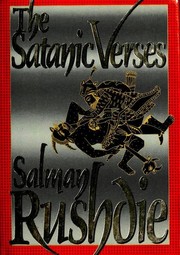
The Satanic Verses
Rushdie's novel of two Indian actors transformed after surviving a plane explosion, with dream sequences drawing on the life of the prophet Muhammad.
Why it was banned: India banned its import in October 1988, followed by many other countries; in February 1989 Iran's Ayatollah Khomeini issued a fatwa calling for Rushdie's death.
In printAffiliate link: Bookshop.org supports independent bookshops, and we earn a small commission at no extra cost to you.
What The Satanic Verses is about
The novel opens with two Indian actors falling from the sky over the English Channel after terrorists blow up their hijacked jet. Gibreel Farishta, a Bollywood star famous for playing Hindu gods, and Saladin Chamcha, an anglicised voice actor who has made his life in London, survive the fall and are transformed: Gibreel acquires a halo and Saladin grows horns and hooves. Their stories in London, which deal with immigration, racism and identity, alternate with Gibreel's dreams. One sequence of dreams follows a merchant-turned-prophet named Mahound in a desert city called Jahilia, and draws on the early life of the prophet Muhammad, including the episode historians call the "satanic verses", in which some verses were said to have been revealed and then withdrawn as the work of Satan.
The ban, in full
Viking published the novel in London on 26 September 1988. It was shortlisted for the Booker Prize and won the Whitbread novel award. Many Muslims, however, found the Mahound chapters blasphemous, especially their portrayal of the prophet and of his wives.
On 5 October 1988 India banned imports of the book under its Customs Act, the first country to act. Bangladesh, Sudan, South Africa, Sri Lanka, Pakistan and others followed. Protests spread: in January 1989 copies were burned at a demonstration in Bradford, England, and in February several people were killed when police fired on protesters in Islamabad and in Bombay.
On 14 February 1989 Iran's supreme leader, Ayatollah Ruhollah Khomeini, issued a fatwa calling on Muslims to kill Rushdie and everyone involved in publishing the book who knew its contents. Rushdie went into hiding under British police protection for about nine years. The book's Japanese translator, Hitoshi Igarashi, was murdered in 1991; its Italian translator was stabbed and its Norwegian publisher shot, and both survived. In 1998 Iran's government said it would not support the fatwa, though it was never withdrawn. On 12 August 2022 Rushdie was stabbed repeatedly while on stage at the Chautauqua Institution in New York State, and lost the sight of one eye.
India's import ban stayed in place for decades. In 2024 the Delhi High Court closed a challenge to it after the authorities could not produce the original ban notification, which reopened the question of whether the book can legally be imported.
About Salman Rushdie
Salman Rushdie (born 1947 in Bombay) was educated in England and worked in advertising before his second novel, Midnight's Children, won the Booker Prize in 1981. His novel Shame (1983) was banned in Pakistan. He wrote about his years in hiding in the memoir Joseph Anton (2012), named after the alias he used, and about the 2022 attack in Knife (2024). He was knighted in 2007.
Which edition to read
The text is the same in all editions; Penguin Random House publishes it in the UK and the US.
Reception and legacy
The Rushdie affair became one of the defining free-speech controversies of the late twentieth century. It divided writers, governments and religious leaders, and shaped later debates about blasphemy, offence and violence against authors and publishers.
Questions
Why was The Satanic Verses banned?
Because many Muslims considered its dream chapters about the prophet Muhammad blasphemous.
Is The Satanic Verses still banned?
It remains banned in several countries with Muslim majorities and in Iran, where the fatwa has never been lifted. Its legal status in India has been uncertain since 2024. More: books banned in India, books banned in Iran.
At a glance
- Shelf status
- In print
- Banned by
- A government
- Why it was banned
- India banned its import in October 1988, followed by many other countries; in February 1989 Iran's Ayatollah Khomeini issued a fatwa calling for Rushdie's death.
- Author
- Salman Rushdie
- Topics
- East Indians, Didactic fiction, Literary fiction, Families, Islam, Survival
- First published
- 1988
- Shelf note
- In print; ban history from the public record.
- Find a copy
- Bookshop.org ↗ (affiliate link)
Library record on Open Library
Banned Bookshelf lists books for reference. A listing is not an endorsement, and we host no copies.
Related
- Children of GebelawiClassics, Fiction, Religion & secret societies
- LolitaClassics, Fiction
- Madame BovaryClassics, Fiction
- The Master and MargaritaClassics, Fiction, Religion & secret societies
- 9/11: The Big Lie9/11 & false flags
- All Quiet on the Western FrontClassics, Fiction
Cover image and topics: Open Library.