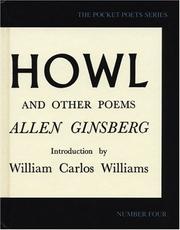
Howl and Other Poems
Ginsberg's collection led by 'Howl', a defining work of the Beat Generation.
Why it was banned: US Customs seized copies in 1957 and San Francisco police arrested its publisher, Lawrence Ferlinghetti of City Lights; a judge ruled the book not obscene later that year.
In printAffiliate link: Bookshop.org supports independent bookshops, and we earn a small commission at no extra cost to you.
What Howl and Other Poems is about
"Howl" is a long poem in three parts by Allen Ginsberg. The first part, written in long, rolling lines, describes "the best minds of my generation": friends and outcasts driven to madness, drugs, poverty and despair in postwar America, including people Ginsberg knew in mental hospitals. The second part denounces Moloch, the ancient god of child sacrifice, as a symbol of the industrial, militaristic, money-driven society that destroys them. The third part is addressed to Carl Solomon, whom Ginsberg had met in a psychiatric hospital. A "Footnote to Howl" declares everything holy. The small book also includes shorter poems such as "A Supermarket in California" and "America".
The poem spoke openly about homosexuality, drug use and mental illness, in language that included sexual slang. It became one of the founding works of the Beat Generation.
The ban, in full
Ginsberg first read "Howl" at the Six Gallery in San Francisco in October 1955. Lawrence Ferlinghetti, poet and co-owner of the City Lights bookshop, published it in 1956 as number four in his Pocket Poets series, printed in England. In March 1957 US Customs seized more than 500 copies of a second printing as obscene; the federal prosecutor declined to pursue the case, and the copies were released. In June 1957 San Francisco police bought a copy at City Lights and arrested Ferlinghetti and the shop's manager, Shigeyoshi Murao, for selling obscene material.
The American Civil Liberties Union defended them. At the trial, writers and critics testified to the poem's literary value. On 3 October 1957 Judge Clayton Horn ruled that "Howl" was not obscene because it had redeeming social importance. The publicity made the book a bestseller.
About Allen Ginsberg
Allen Ginsberg (1926–1997) grew up in Paterson, New Jersey, the son of a poet; his mother suffered from severe mental illness, which he wrote about in his later poem "Kaddish". At Columbia University he became friends with Jack Kerouac and William S. Burroughs, the core of the Beat writers. He went on to become a prominent anti-war and gay-rights activist, and won the National Book Award in 1974.
Which edition to read
City Lights still publishes the original Pocket Poets edition. The annotated edition, Howl: Original Draft Facsimile, includes Ginsberg's drafts and notes.
Reception and legacy
"Howl" is one of the most widely read American poems of the twentieth century. The trial is the subject of the 2010 film Howl, with James Franco as Ginsberg. In 2007 the radio network Pacifica declined to broadcast a reading of the poem for fear of fines from the Federal Communications Commission.
Questions
Why was Howl banned?
Customs and police called it obscene because of its sexual language and its open treatment of homosexuality and drug use.
Is Howl still banned?
No; the 1957 ruling cleared it. More: books banned in the United States, Naked Lunch.
At a glance
- Theme
- Classics
- Shelf status
- In print
- Banned in
- United States
- Why it was banned
- US Customs seized copies in 1957 and San Francisco police arrested its publisher, Lawrence Ferlinghetti of City Lights; a judge ruled the book not obscene later that year.
- Author
- Allen Ginsberg
- Topics
- Poetry (poetic works by one author), American poetry, American Poets, Beat generation, Poetry
- First published
- 1956
- Shelf note
- In print; ban history from the public record.
- Find a copy
- Bookshop.org ↗ (affiliate link)
Library record on Open Library
Banned Bookshelf lists books for reference. A listing is not an endorsement, and we host no copies.
Related
- Leaves of GrassClassics
- All Quiet on the Western FrontClassics, Fiction
- Animal FarmClassics, Fiction, Politics & power
- Berlin AlexanderplatzClassics, Fiction
- Brave New WorldClassics, Fiction
- Burger's DaughterClassics, Fiction, Politics & power
Cover image and topics: Open Library.