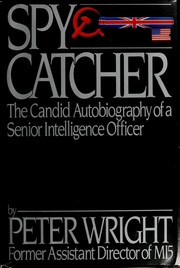
Spycatcher
The memoir of a former assistant director of MI5, alleging illegal operations by the British security service.
Why it was banned: The British government obtained injunctions against its publication and against newspapers reporting on it; it was published in the US and Australia in 1987, and the House of Lords lifted the restrictions in 1988.
In printAffiliate link: Bookshop.org supports independent bookshops, and we earn a small commission at no extra cost to you.
What Spycatcher is about
Spycatcher is the memoir of Peter Wright, a scientist who worked for MI5, Britain's domestic security service, from 1955 to 1976 and rose to be an assistant director. Written with the television producer Paul Greengrass, it describes Wright's technical work on bugging and surveillance; his famous remark that MI5 "bugged and burgled our way across London"; his long hunt for Soviet moles inside British intelligence after the defections of Burgess, Maclean and Philby; his belief that Sir Roger Hollis, MI5's former director general, had been a Soviet agent; and his claim that a group of MI5 officers had plotted to undermine the Labour prime minister Harold Wilson.
The ban, in full
Wright had retired to Tasmania, and the book was to be published in Australia. In 1985 the British government went to court in New South Wales to stop it, arguing that former intelligence officers owed a lifelong duty of confidentiality. During the trial the Cabinet Secretary, Sir Robert Armstrong, admitted in cross-examination that a letter he had approved was misleading and that he had been "economical with the truth", a phrase that became famous. The government lost in 1987, and its appeals failed.
In Britain, the government obtained injunctions stopping newspapers from reporting Wright's allegations. When the book was published in the United States in July 1987, it became a bestseller and copies flowed into Britain, but British newspapers were still forbidden from printing its contents. The Daily Mirror printed upside-down photographs of the Law Lords who had upheld the gag, under the headline "You fools". In October 1988 the House of Lords ruled that, since the book was now freely available around the world, the restrictions could no longer be justified. In 1991 the European Court of Human Rights found that keeping the injunctions in place after the US publication had violated the newspapers' freedom of expression.
About Peter Wright
Peter Wright (1916–1995) was the son of a Marconi engineer and worked on naval radar research before joining MI5 as its first full-time scientist. He left with a pension he considered unfairly small, which he said was one reason he wrote the book. Spycatcher made him a millionaire. Paul Greengrass later became a well-known film director.
Which edition to read
The text is the same in the Australian, American and later British editions. Second-hand copies of the first editions are common.
Reception and legacy
The book sold millions of copies, helped in part by the publicity of the ban. Historians of intelligence have disputed some of Wright's claims, particularly about Hollis. The affair led to the Official Secrets Act 1989, which removed any public-interest defence for intelligence officers who disclose secrets.
Questions
Why was Spycatcher banned?
The British government said Wright had breached his duty of confidentiality to MI5 and that publication would damage national security.
Is Spycatcher still banned in the UK?
No; the restrictions were lifted in 1988. More: books banned in the United Kingdom, books blocked by courts.
At a glance
- Theme
- Politics & power
- Shelf status
- In print
- Banned by
- A government, A court
- Banned in
- United Kingdom
- Why it was banned
- The British government obtained injunctions against its publication and against newspapers reporting on it; it was published in the US and Australia in 1987, and the House of Lords lifted the restrictions in 1988.
- Author
- Peter Wright
- Topics
- Great Britain, Intelligence officers, Intelligence service, Peter Wright, Great Britain. MI5, Grande-Bretagne. MI5
- First published
- 1987
- Shelf note
- In print; ban history from the public record.
- Find a copy
- Bookshop.org ↗ (affiliate link)
Library record on Open Library
Banned Bookshelf lists books for reference. A listing is not an endorsement, and we host no copies.
Related
- By Way of DeceptionIsrael & Palestine, Politics & power
- The Other Side of DeceptionIsrael & Palestine, Politics & power
- The Official CIA Manual of Trickery and DeceptionMind control & MK-Ultra, Hypnosis & persuasion
- Animal FarmClassics, Fiction, Politics & power
- Behind the Balfour DeclarationIsrael & Palestine, Politics & power
- Behold a Pale Horse9/11 & false flags, Politics & power
Cover image and topics: Open Library.